
CONTRA hosts lectures, panels, seminars, and conferences on transnational corruption, illicit networks, migration, and governance. From major convenings to informal brown bags, our events connect research with real-world policy debates.
Upcoming Events
From Cartels to Combatants: The Intense Militarization of America’s Drug War
Date: Monday, March 23, 2026
Time: 12:30 to 6 p.m.
Location: George Mason University, Mason Square, FUSE Building (Room 1311)
Open to: Public
CONTRA will mark its public launch with a half-day conference bringing together scholars and practitioners to examine how U.S. drug policy has shifted over the past decade and what a more militarized approach could mean for governance, international cooperation, and regional stability across the Western Hemisphere.
Conference sessions will explore the legal, strategic, and diplomatic implications of treating transnational criminal organizations as wartime adversaries, including the use of counterterrorism frameworks, the legal foundations for action against criminal networks, and the potential geopolitical consequences of these policy shifts.
Register for the Cartels to Combatants conference today.
CONFERENCE PROGRAM
12:30–1:15 PM | Opening Remarks including:
Mark J. Rozell
Mark J. Rozell is the founding dean of the Schar School of Policy and Government at George Mason University, where he holds the Ruth D. and John T. Hazel Chair in Public Policy. He is the author, co-author, or editor of more than 30 books on U.S. government and politics, covering topics such as the presidency, religion and politics, and the media. An expert on executive privilege, he has testified before Congress and lectured extensively across more than 20 countries, including China, Germany, and Japan. Since 1994, he has served as a judge for the Gerald R. Ford Award for Reporting on the Presidency and currently writes a twice-monthly column for the Richmond Times-Dispatch.
Guadalupe Correa-Cabrera
Guadalupe Correa-Cabrera is a professor and co-director of the Corruption, Networks, and Transnational Crime Research Center (CONTRA) at George Mason University. She is Past President of the Association for Borderlands Studies (ABS) and co-editor of the journal International Studies Perspectives (Oxford University Press). She was named Distinguished Visiting Scholar at the Davidson Institute for Global Security of the John Sloan Dickey Center for International Understanding at Dartmouth College in 2025 and is a Visiting Scholar at the Center for Research on Latin America and the Caribbean (CIALC) of the National Autonomous University of Mexico (UNAM). She has two forthcoming books: Carteles Inc: A “New Generation” of Criminal Networks (Siglo XXI Editores, Spanish) and Coyotes LLC: The Industry of Human Smuggling and the American “Dream” (Columbia University Press).
1:15–2:30 PM | Panel I: Operational and Diplomatic Implications
This panel examines the practical consequences of applying counterterrorism frameworks to organized crime. Discussion will focus on how Foreign Terrorist Organization (FTO) designations could affect intelligence collection, sanctions regimes, law-enforcement cooperation, and diplomatic relations with key partners—particularly Mexico and other affected states.
Moderator
Alan Bersin
Alan Bersin served as Assistant Secretary for Policy and International Affairs and Chief Diplomatic Officer at the U.S. Department of Homeland Security. His prior federal appointments include Commissioner of U.S. Customs and Border Protection, Special Representative for Border Affairs at DHS, and U.S. Attorney for the Southern District of California. From 2012 to 2015, he served as Vice President of INTERPOL for the Americas and as a member of the INTERPOL Executive Committee. He has also been a fellow at the Canada and Mexico Institutes, Harvard’s Kennedy School Belfer Center, and Aspen-Mexico. He is Executive Chairman (Emeritus) at Altana.AI.
Speakers
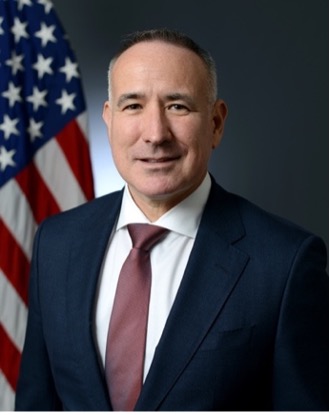
Albert “Jim” Marckwardt
Dr. Albert “Jim” Marckwardt is Professor of Strategy and Defense Policy at the Inter-American Defense College and serves as Faculty Co-Lead for the Americas and founder of the Latin Americas Studies Initiative at Johns Hopkins SAIS. Previously, he was Associate Professor and Faculty Lead for Institutional Capacity Building at the Defense Security Cooperation University. A retired U.S. Army lieutenant colonel and Foreign Area Officer, he served 29 years in policy and security cooperation roles, including Country Director for Colombia and Venezuela (OSD Policy), planner at the Defense Intelligence Agency, and assignments in Honduras and Mexico. He deployed twice for Operation Iraqi Freedom, co-authored The Defense of Jisr al-Doreaa, and publishes on regional security and defense reform. He holds a doctorate and master’s from Johns Hopkins SAIS.
Kenneth “Ken” Cuccinelli II
Kenneth “Ken” Cuccinelli II graduated from the University of Virginia with a degree in mechanical engineering, earned a Juris Doctor from George Mason University’s Antonin Scalia Law School, and holds a master’s degree in international transactions from George Mason University’s School of Public Policy. He has practiced law for more than 30 years in a wide range of practice areas. He served as Virginia’s 46th Attorney General and as Acting Deputy Secretary of the Department of Homeland Security from 2019 to 2021. He continues to be a national commentator and practitioner on matters of law and homeland security.
Ben Rohrbaugh
Ben Rohrbaugh is the President of Lantern UAS, a company developing counter-drone systems for the U.S. military. He is a Senior Fellow at the Robert Strauss Center at the University of Texas at Austin and has taught at the Center for Homeland Defense and Security at the Naval Postgraduate School. He is the author of More or Less Afraid of Nearly Everything: Homeland Security, Borders, and Disasters in the Twenty-First Century (University of Michigan Press). From 2014 to 2016, he served as Director for Enforcement and Border Security at the National Security Council in the White House. Previously, he worked as Senior Advisor to the Commissioner of U.S. Customs and Border Protection.
2:30–2:40 PM | Break
2:40–3:55 PM | Panel II: Law and Legality
This panel explores the constitutional, statutory, and international legal foundations for the use of military force against transnational criminal networks. Panelists will assess the domestic legal authorities that could be invoked, how responsibility and discretion are allocated across institutions, the implications for accountability and institutional constraints, and the precedents such actions might establish for future administrations.
Moderator
John Hasnas
John Hasnas is Professor of Business at Georgetown University’s McDonough School of Business, Professor of Law (by courtesy) at Georgetown University Law Center, and Executive Director of the Georgetown Institute for the Study of Markets and Ethics. Professor Hasnas received his B.A. in philosophy from Lafayette College, his J.D. and Ph.D. in legal philosophy from Duke University, and his LL.M. in legal education from Temple University Law School. His most recent books include Common Law Liberalism (Oxford University Press) and Questioning the Assumptions of Political Discourse: A Philosophical Analysis of Fundamental Concepts (Routledge).
Speakers
John F. Havranek
John F. Havranek is Counsel with Nixon Peabody LLP and a member of the Government Investigations and White Collar Defense group. He is a leading national security and homeland security professional and proven litigator with more than 35 years of government service with the United States Department of Homeland Security (DHS) and the United States Department of Defense (DoD). John has served as the Principal Deputy General Counsel for DHS, the Associate General Counsel for the Operations and Enforcement Law Division of DHS, and as Deputy Legal Counsel to the Chairman of the Joint Chiefs of Staff. John’s federal service provides him extensive expertise in government civil and criminal enforcement matters.
Nathan P. Goodman
Nathan P. Goodman is a Senior Fellow at the F.A. Hayek Program for Advanced Study in Philosophy, Politics, and Economics at the Mercatus Center at George Mason University. His current research analyzes the militarization of U.S. border security policy. He earned his PhD in economics at George Mason University and then worked as a postdoctoral fellow at New York University. His research has been published in various academic journals, including Constitutional Political Economy, European Economic Review, Journal of Economic Behavior and Organization, Public Choice, Eastern Economic Journal, Economics of Peace and Security Journal, Behavioural Public Policy, and Journal of Institutional Economics. He writes on Substack at Guns, Guards, and Governance.
David D. Vandenberg
David D. Vandenberg is an attorney advisor in civil rights at the U.S. Department of Justice in Washington, D.C. He coordinates civil rights litigation and regulations across all federal departments and agencies. He attended the University of Texas School of Law, where Oxford University Press designated him a reporter in American law for his work in international business law. He has a Ph.D. from the University of North Carolina at Chapel Hill, where he worked on the natural law basis of American society at the time of the founding of the United States. More recently, he coordinated the legal basis for the Border Security Taskforce at the Heritage Foundation.
3:55–4:05 PM | Break
4:05–5:20 PM | Panel III: Strategic and Geopolitical Implications
This panel evaluates the broader strategic consequences—intended and unintended—of a militarized approach to counternarcotics. Topics include escalation risks, lessons from post-9/11 counterterrorism, effects on corruption and governance, and implications for U.S. credibility and regional stability.
Moderator
Celina Realuyo
Celina Realuyo is Professor of Practice at the William J. Perry Center for Hemispheric Defense Studies at the National Defense University where she focuses on U.S. national security, transnational organized crime, counterterrorism, cybersecurity, and counter threat finance issues in the Americas. As a former U.S. diplomat and international banker with Goldman Sachs, State Department Director of Counterterrorism Finance Programs and professor at the National Defense, George Washington, and Joint Special Operations Universities, she has over two decades of international experience in the public, private and academic sectors. She testifies regularly before Congress on the role of China and the Mexican cartels in illicit fentanyl trafficking, Lebanese Hezbollah in the Americas and the convergence of terrorism and crime.
Speakers
Harrison Mann
Harrison Mann is Associate Director for Policy and Campaigns at Win Without War. His public commentary focuses on illuminating the connections between foreign and domestic policy and reforming U.S. Middle East policy, appearing in outlets including the BBC, Foreign Policy, The Guardian, and The Washington Post. Harrison is a former U.S. Army major assigned to the Defense Intelligence Agency who resigned in protest of DoD support for the Israeli military during the Gaza genocide. Harrison holds a Master’s in Public Administration from the Harvard Kennedy School and a bachelor’s in Middle Eastern Studies from the College of William & Mary.
Enrique Berruga Filloy
Enrique Berruga is the CEO of The Aspen Institute in Mexico. He is a Mexican diplomat and author. He has been Mexico’s ambassador to Ireland, Costa Rica and the United Nations. He served as deputy foreign minister in charge of North American affairs and as director of the Mexican International Cooperation Agency. President of the Mexican Council for Foreign Affairs and Vice President of Grupo Modelo brewery. Enrique has dedicated a good part of his life to writing fiction and journalistic pieces. He has published six novels, some of them translated into Arabic, English and French. One of them, Foreign Property, was turned into a film and released on a streaming platform.
Bella Grabowski
Bella Grabowski serves as the Sovereign and Strong America Campaign Director at the America First Policy Institute. She is a defense policy expert who served in both Trump Administrations and at the Department of War as Senior Liaison to the Assistant Secretary for Space Policy. She worked in the Office of the Undersecretary of Defense for Acquisition & Sustainment on the Industrial Capabilities Report, held roles in government and interagency affairs, trade and foreign investment, commercialization, Foreign Military Sales, Direct Commercial Sales, and space acquisitions. Bella holds a Professional Master’s in Statecraft & National Security Affairs from the Institute of World Politics and bachelor’s degrees in economics and Spanish from Pepperdine University. She is fluent in English, Polish, and Spanish.
5:20–5:25 PM | Transition Break
5:25–5:30 PM | AI Policy Simulation Experiment
Naoru Koizumi
This brief presentation introduces an AI experiment in which the team plans to develop a model that simulates policy debates based on speakers’ documented positions. The simulated debates will then be compared with the actual conference discussions and analyzed after the event. Findings from this comparison will be presented at a follow-up seminar to assess the reliability of AI for simulating policy discussions.
Naoru Koizumi is Professor of Public Policy and Associate Dean for Research and Grants at the Schar School of Policy and Government at George Mason University. Her research focuses on health and medical policy, particularly kidney transplantation systems and global kidney trade and trafficking. Her work uses quantitative and computational approaches, including social network analysis and modeling, to examine organ transplantation systems and illicit organ trade.
5:30–6:00 PM | Fireside Chat
Guadalupe Correa-Cabrera & Andrés Martinez Fernandez
Andrés Martinez Fernandez is the Senior Policy Analyst for Latin America in The Heritage Foundation’s Allison Center for National Security, where he leads research on U.S. policy toward the region. His work focuses on economic development, transnational organized crime, and the activities of extra-regional actors in Latin America. Previously, he served as a researcher at the American Enterprise Institute, authoring reports on U.S. sanctions and organized crime, and worked as an analyst for a global market intelligence firm. His analysis has appeared in Foreign Policy, The Los Angeles Times, and The National Interest. He holds a master’s degree from the Johns Hopkins School of Advanced International Studies.
Closing Remarks
Guadalupe Correa-Cabrera
Event Sponsor
This event was sponsored by the Institute for Humane Studies.
The Institute for Humane Studies (IHS) is a nonprofit organization that supports the achievement of a freer and more humane society by connecting and assisting graduate students, scholars, and public intellectuals who are driving progress in critical conversations shaping the 21st century.
New Lines Institute Mafiacracies Project Launch
Date: March 18, 2026
Time: 10 a.m. – 1:15 p.m.
Location: Online
Analyzing criminality and gray zone operations in Latin America and Eastern Europe.
Opening remarks and virtual discussion, “Organized Crime and Governance in Latin America.” As the U.S. recalibrates its approach to crime and security in Latin America and the criminal landscape continues to evolve, this discussion will convene key experts on crime, conflict, and regional politics to explore what these shifts mean for governance, security, and illicit activity in the region. This panel will feature:
- Rafaella Lipshitz, Associate Analyst, New Lines Institute (Moderator);
- Stefano Ritondale, Chief Intelligence Officer, Astorias;
- Dr. Will Freeman, Fellow for Latin America, the Council on Foreign Relations.
- James Bosworth, Non-Resident Fellow, Stimson Center;
- Dr. Guadalupe Correa-Cabrera, TraCCC at George Mason University;
Register for the New Lines Institute Mafiacracies Project Launch event
Featured Past Events
- Americas in the Crosshairs (December 10, 2025)
- The Oligarchs’ Grip: Wealth, Power, and the Future of Democracy (October 28, 2025)
- The War on Narcoterrorism: Is the War on Drugs Becoming the War on Terror? (April 4, 2025)