
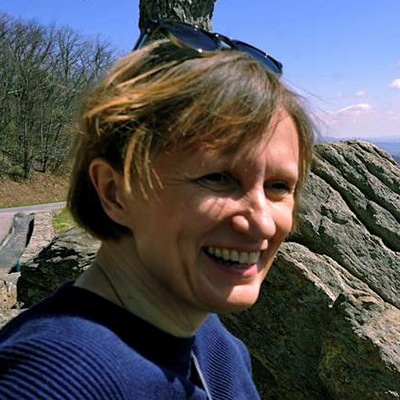
Urszula Horoszko is a research associate professor and deputy director of the Corruption, Networks, and Transnational Crime Research Center (CONTRA). Her research examines migration and displacement, migrant and refugee health, NGOs in migration and health governance, and the privatization of migration systems, focusing on how networks of state and nonstate actors shape policy and humanitarian outcomes.
Horoszko brings more than 15 years of experience working across academia, government, and civil society, with a strong emphasis on collaboration and applied research. Her work is grounded in sustained partnerships with nongovernmental organizations, research institutions, and public-sector actors, and bridges academic research with policy engagement and practice. She has previously served as a senior program manager and as head of public diplomacy at the Embassy of the Republic of Poland, working closely with diplomats, policymakers, academic institutions, and civil society organizations on initiatives at the intersection of culture, science, and public policy.
Horoszko holds a PhD in communication from George Mason University and a PhD in English from the University of Wisconsin–Madison.
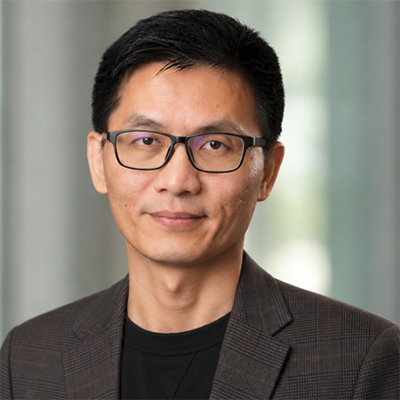
Meng-Hao Li is Deputy Director of the Center for Biomedical Science and Policy and Adjunct Faculty at George Mason University’s Schar School of Policy and Government. His research focuses on illicit trafficking networks, computational social science, and network analysis, with particular emphasis on transnational organized crime, drug trafficking, organ trafficking, and global illicit supply chains.
His work integrates large-scale data analytics, social network analysis, machine learning, and artificial intelligence to examine the structure, dynamics, and governance challenges of complex trafficking systems. He has developed computational approaches using open-source intelligence (OSINT), court records, and large administrative datasets to identify criminal relationships, trafficking routes, and cross-border network structures.
Li’s broader research interests include health policy, digital governance, and the application of AI and large language models to policy analysis and security research. His collaborative work has appeared in journals including BMJ Global Health, Social Science & Medicine, Trends in Organized Crime, JMIR AI, and JMIR Infodemiology. He received the Joseph L. Fisher Public Policy Award for his doctoral work in public policy at George Mason University.
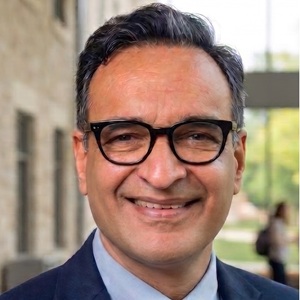
Rajendra Kulkarni is a researcher at School of Public Policy. His research interests span multiple disciplines including complexity science, discrete nonlinear dynamical systems, blockchain, spatio-temporal systems, and network science with the focus on developing analytical models for research in public policy, regional science, and economics. His interdisciplinary approach seeks to bridge the gap between computational science and how it may be applied to policy design, particularly in understanding how localized disruptions propagate through global networks. Through this approach; his research addresses critical contemporary challenges in supply chain resilience, spatial economics, and institutional governance.
Wenshen Pan is a visiting PhD student at the Schar School of Policy and Government at George Mason University, and a doctoral student in the School of International Development and Cooperation (SIDC) at the University of International Business and Economics (UIBE). Her research examines international development, global governance, and international political economy, with a specific focus on the role of non-state actors in transactional governance. Pan brings robust quantitative research experience to her work. Her empirical approach is grounded in data analysis and policy review, evaluating complex issues such as the impact of economic policy uncertainty on corporate investment and the role of venture capital in export supply chain diversification. Additionally, her academic interests extend to global value chains and digital business ecosystems.
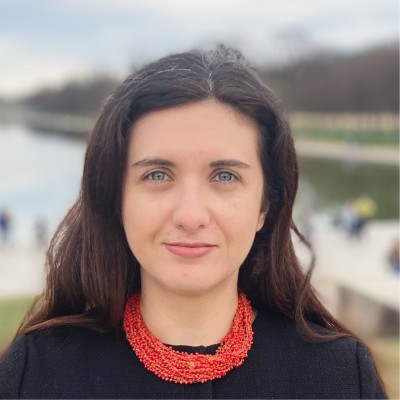
Mariia Panga is a PhD candidate in Public Policy at the Schar School of Policy and Government at George Mason University, where she has studied since 2021. Prior to her doctoral work, she served as a senior expert at the National Bank of Ukraine, where she contributed to financial stability and bank supervision. She holds an MA in Economic Analysis from the Kyiv School of Economics (2016). Her dissertation research examines how Russia’s affiliated illicit finance networks evade U.S. sanctions through the global offshore system, professional enablers, and financial secrecy, exposing systemic vulnerabilities in the international financial system.
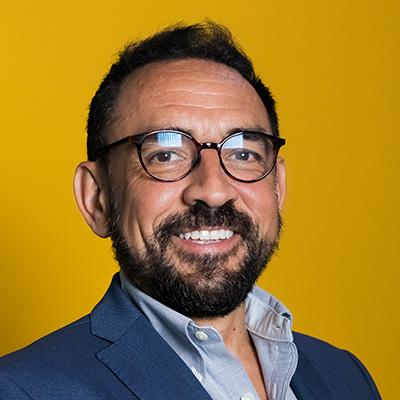
Camilo Pardo-Herrera is an international development scholar focusing on the political economy of development and its intersection with corruption, and political and criminal violence, all with a regional focus on Latin American.
His personal research agenda links different forms of organized crime, political violence, and corruption to development outcomes in the Latin American region. He has also done extensive work on the political economy of natural resource extraction in Latin America, Africa, and Asia.
Pardo-Herrera brings an excellent combination of personal experience designing and implementing national-level policy to address organized crime and corruption, a profound commitment for evidence-based policy analysis and design, and strong analytical and methodological capacities to pose and answer complex development questions.
Prior to his academic life, he gathered more than 15 years of experience working on conflict management, post-conflict reconstruction, human rights issues, and natural resource management in the Latin American region. He did so while working for national governments, the civil society, and multilateral development organizations.
Pardo-Herrera finished his PhD in public policy at George Mason University and his master’s degree in democracy and democratization from the University College London thanks to a Chevening Scholarship awarded by the United Kingdom’s Foreign, Commonwealth and Development Office.
He has presented his research––among other places––at the World Bank, the Organization of American States, the United Nations, as well as at academic forums around Europe and the Americas.
Pardo-Herrera currently teaches at Texas Tech University–Costa Rica and consults on different economic development issues for private and multilateral organizations.
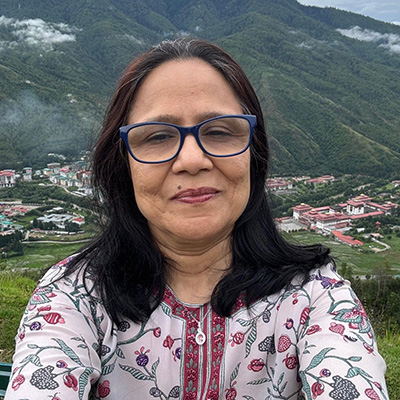
Priya Sahu is a tax policy and anti–money laundering specialist with extensive experience in financial intelligence, investigation and regulatory frameworks. As a former Additional Director of the Financial Intelligence Unit–India, she has led national efforts on financial crime investigation, STR/SAR analysis, and international cooperation.
She has now transitioned into a researcher and consultant advising institutions such as the International Finance Corporation, United Nations Development Programme and the United Nations Capital Development Fund. Her research explores trade-based money laundering, corruption, tax crimes, and the effectiveness of financial intelligence systems, focusing on how governance weaknesses and regulatory gaps enable illicit financial flows and transnational criminal networks across borders. Priya’s work bridges practitioner insight with scholarly inquiry to illuminate the political economy of financial crime in an evolving global security landscape.